Do Mouthguards Prevent Concussions?
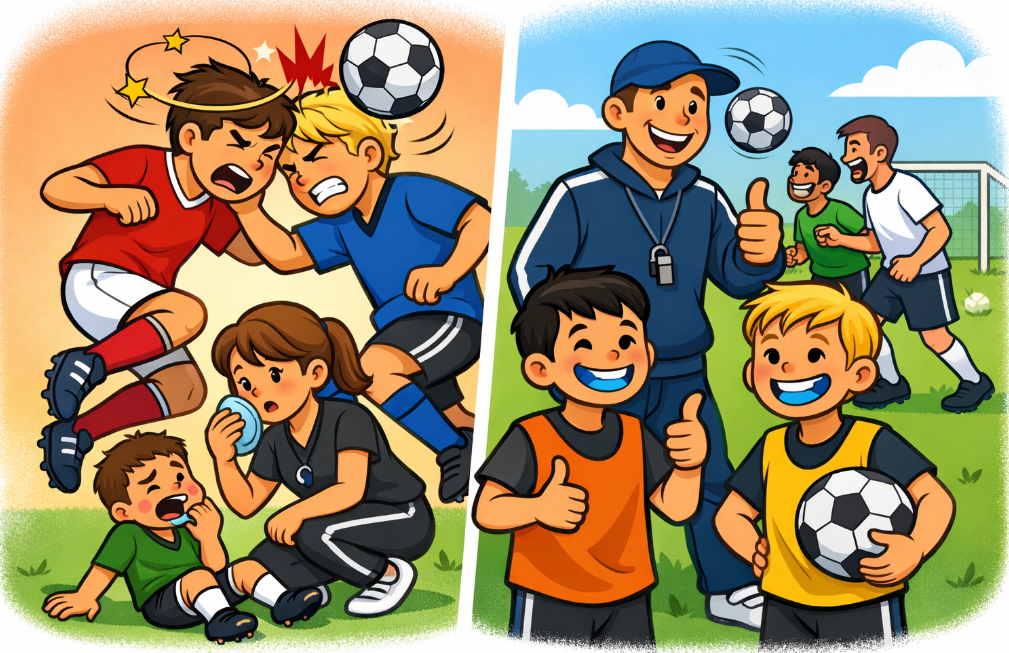
Picture a corner kick late in a tight match. Two players leap, elbows tucked, eyes locked on the ball. There’s a clash of heads, a shout, and one player hits the ground holding their mouth. Best case: a cut lip. Worst case: broken teeth, dental surgery, and weeks out of training.
Most soccer coaches worry about concussions first. Teeth and jaws often come second—until something goes wrong.
A large scientific review published in Sports Medicine examined this issue across many sports, including soccer. The takeaway is clearer than many people expect: mouthguards dramatically reduce mouth and face injuries—but they are not a magic shield against concussions.
That distinction matters for how we train, equip, and educate players.
What the Research Actually Studied
The researchers analyzed 26 studies comparing athletes who wore mouthguards with those who didn’t. These weren’t lab tests—they were real teams, real games, and real injuries tracked over seasons. Here’s what they found in plain terms:
- Players without mouthguards had more than twice the risk of orofacial injuries (teeth, lips, jaw, facial bones).
- This protective effect showed up across many sports and age groups.
- For concussions, the effect was small and inconsistent. Wearing a mouthguard did not reliably reduce concussion risk.
Think of a mouthguard like shin guards for your teeth. They’re excellent at absorbing direct contact. But concussions are more like ankle sprains—caused by forces traveling through the whole body and head, not just one impact point.
Why This Matters for Soccer Right Now
Soccer is changing. The game is faster, stronger, and more physical at every level:
- More aerial duels
- Stronger players at younger ages
- Increased emphasis on pressing and physical challenges
At the same time, clubs are under pressure to show they take player safety seriously—not just head injuries, but long-term health and availability. Dental injuries are costly, painful, and often preventable. And unlike many injury-prevention tools, mouthguards are simple, cheap, and available today.
Turning Science into Practice: 5 Coaching Takeaways
1. Mouthguards Work—But Only for the Right Job
Mouthguards are proven to reduce:
- Broken or chipped teeth
- Cut lips and cheeks
- Jaw and facial injuries
They should be framed as dental protection, not concussion prevention. Clear messaging builds trust.
2. Use Game-Day Moments to Normalize Them
Players copy what they see. Encourage:
- Center backs and target forwards to lead by example
- Mouthguard use during headers and physical drills
- Veterans modeling habits for youth players
If your toughest player wears one, others will follow.
3. Fit Matters More Than Brand
The review included stock, boil-and-bite, and custom mouthguards. While all offered protection, poor fit reduces comfort and compliance. Coaching tip:
- For youth teams: start with boil-and-bite
- For high school and competitive clubs: recommend custom-fit options through a dentist
Comfort increases usage. Usage is what prevents injuries.
4. Train with Them—Not Just Wear Them
Many athletes skip mouthguards in training. That’s a mistake. Data from contact sports shows:
- Injury risk doesn’t disappear in practice
- Habits formed in training carry into matches
Build mouthguards into:
- Heading drills
- Small-sided physical games
- Defensive set-piece training
5. Align with the Bigger Safety Conversation
Mouthguards won’t stop concussions—but they fit into a layered safety strategy:
- Neck strengthening
- Proper heading technique
- Rule enforcement
- Load management
Smart clubs don’t chase one solution. They stack small advantages.
The Big Picture for Clubs and Programs
From a club-development standpoint, this is low-hanging fruit. Mouthguards:
- Reduce preventable injuries
- Lower medical and dental costs
- Keep players available
- Signal a culture of care and professionalism
When parents ask, “Is this safe?” you can answer with evidence—not opinions.
Your Turn to Kick It Off
Science gives us clarity, but coaches make the choices that matter on the field.
- How could you introduce mouthguards without resistance from players?
- Would normalizing them in training change buy-in on match day?
- Where do mouthguards fit into your club’s broader player-safety strategy?
If you’ve tried this—or decided not to—share what happened. The best coaching ideas spread the same way goals do: one good pass at a time.