U.S. Soccer Heat Guidelines: What Every Coach, Parent, and Referee Should Know This Summer
Summer soccer is one of the best parts of the year—but it’s also when the risk of heat-related illness is highest. Every season, players experience heat cramps, heat exhaustion, and, in rare cases, life-threatening exertional heat stroke.
That’s why the U.S. Soccer Heat Guidelines exist. They’re designed to help coaches, referees, clubs, and parents make informed decisions before players ever step onto the field.
Heat Is More Than Just the Air Temperature
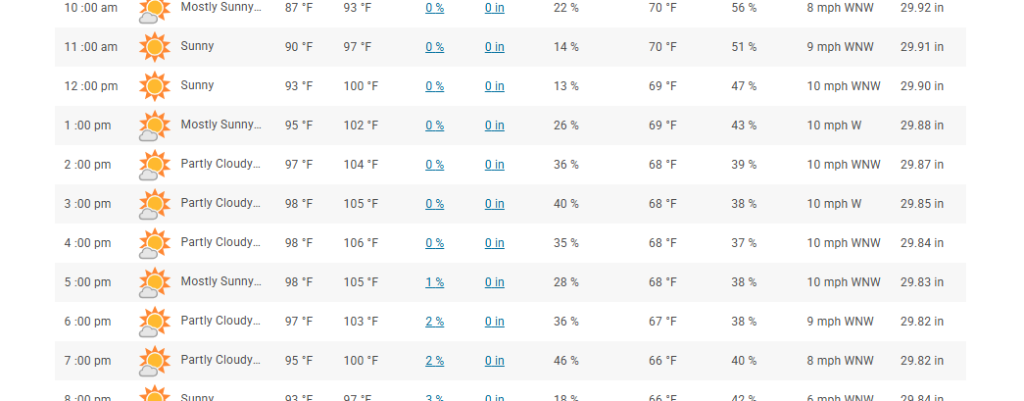
One of the biggest misconceptions is that a 90°F day automatically means practice should be canceled. In reality, U.S. Soccer recommends using the Wet Bulb Globe Temperature (WBGT) rather than the standard air temperature. WBGT accounts for:
- Air temperature
- Humidity
- Direct sunlight
- Wind
These factors determine how well the body can cool itself. A humid 88°F evening can actually be more dangerous than a dry 95°F afternoon because sweat evaporates less efficiently.
Recognize the Warning Signs
Early recognition is critical. Early symptoms of heat illness include:
- Fatigue or unusual weakness
- Headache
- Nausea
- Dizziness
More serious warning signs include:
- Confusion or altered mental status
- Slurred speech
- Loss of balance
- Hallucinations
- Body temperature above 104°F
These symptoms should never be ignored. Exertional heat stroke is a medical emergency that requires immediate cooling and activation of emergency medical services.
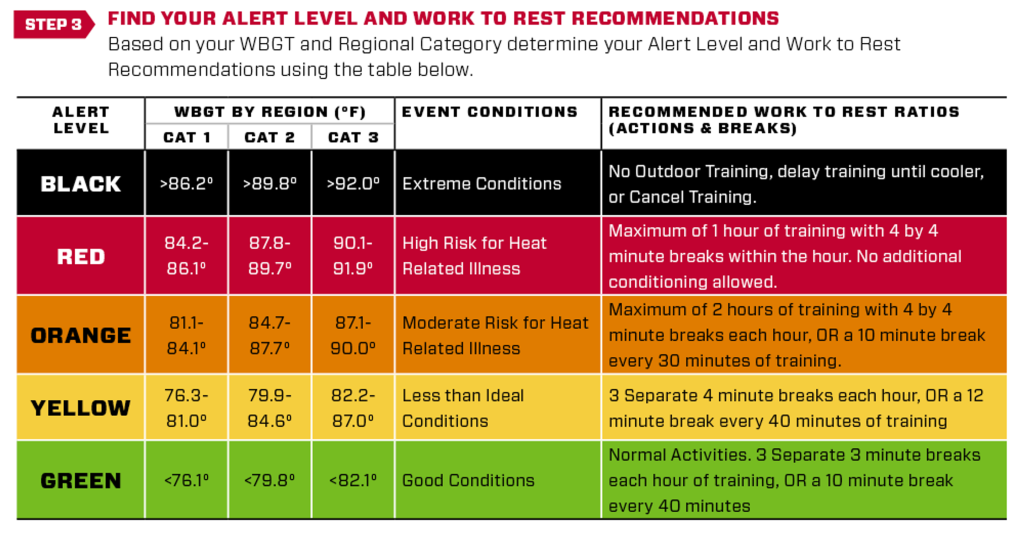
The Five Heat Alert Levels
Rather than making a simple “play or don’t play” decision, U.S. Soccer recommends modifying activity based on environmental conditions.
As heat stress increases, organizations should progressively:
- Increase hydration breaks
- Reduce practice duration
- Lower training intensity
- Eliminate conditioning
- Delay or cancel outdoor activities when necessary
At the highest (“Black”) alert level, outdoor training should be postponed until cooler conditions or canceled altogether.
Hydration Breaks Should Be Planned –> Not Reactive
Waiting until players ask for water is too late. When WBGT reaches higher-risk levels, U.S. Soccer recommends scheduled hydration breaks rather than relying on players to self-regulate.
For matches, this typically means hydration breaks after approximately 30 and 75 minutes during a standard 90-minute game. During training, breaks become more frequent as heat stress increases.
Heat Acclimatization Matters
The first week of preseason is often the most dangerous. The body typically needs 10–14 days to adapt to exercising in hot conditions. U.S. Soccer recommends:
- One practice per day during the first five days
- Gradually increasing workload
- Limiting total practice duration
- Avoiding the hottest part of the day (approximately 11 a.m.–4 p.m.)
- Scheduling adequate recovery between sessions
These gradual increases dramatically reduce the risk of heat illness while allowing athletes to safely adapt.
Every Club Should Have a Heat Policy
A written heat policy shouldn’t just exist—it should be practiced. According to U.S. Soccer, every organization should include:
- Environmental monitoring (preferably WBGT)
- Clear activity modification thresholds
- Unlimited access to water
- Staff trained to recognize heat illness
- Emergency action procedures
- Rapid cooling equipment when possible
Having a plan before an emergency occurs can save lives.
What Parents Can Do
Parents play an important role in keeping young athletes safe. Before practice:
- Encourage players to arrive well hydrated.
- Dress them in lightweight, breathable clothing.
- Make sure they bring plenty of water.
- Tell coaches if your child has been ill recently, as dehydration increases risk.
During practice, remind children that it’s okay to tell a coach if they feel dizzy, nauseated, unusually tired, or “just don’t feel right.” Heat illness can progress quickly, and speaking up early is one of the best safety tools players have.
The Bottom Line
Soccer should challenge players—but it should never put them in unnecessary danger.
By monitoring environmental conditions, appropriately modifying activity, scheduling hydration breaks, and recognizing early warning signs, coaches and clubs can dramatically reduce the risk of heat-related illness while keeping players active all summer long.
The goal isn’t simply to play through the heat. It’s to make sure every player gets home safely after the final whistle.