Are Penalty Shootouts Really Random? What Soccer Research Says
Penalty shootouts are among the most dramatic moments in soccer. Fans often describe them as a “lottery,” where anything can happen and luck decides the winner.
But new research suggests that’s not entirely true.
A study analyzing 409 penalty shootouts across club and international competitions found that stronger teams are more likely to win shootouts. Teams with higher market value — a common proxy for team quality — consistently won more often than weaker teams.
For coaches and players, this finding changes how we should think about shootouts: they are not purely random events. Instead, they reflect a combination of:
- Individual technical ability
- psychological preparation
- team cohesion and support
- and overall squad quality.
Let’s break down what the research found — and how it can help coaches prepare players better.
The Study: What Researchers Analyzed
Researchers examined penalty shootouts from 2008–2024 across major competitions, including:
- UEFA Champions League
- World Cup
- Copa América
- domestic cup competitions across Europe
To estimate team strength, they used player market values from Transfermarkt, comparing the relative value of each team’s starting lineup with that of the players involved in the shootout.
Two measures of strength were tested:
- Pre-game team strength: the market value of the starting 11.
- In-game strength: the market value of players actually taking penalties in the shootout.
Both measures significantly predicted the winner.
Key Finding: Stronger Teams Win More Shootouts
The pattern was surprisingly clear.
Teams with the highest relative market value won about 60% of shootouts, while weaker teams won closer to 40%. Statistically, every 1% increase in team market value relative to the opponent increased the odds of winning by about 1.3%.
This means shootouts are not pure chance — team quality still matters, even in a high-pressure one-kick scenario. However, the researchers also found that team strength explained only around 3–5% of the outcome, indicating that many other factors influence shootout success.
Those factors are where coaching and preparation become crucial.
What This Means for Soccer Coaches
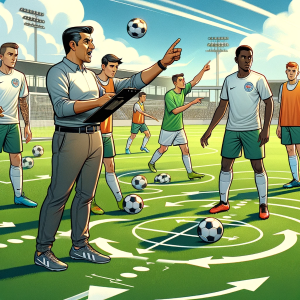
The research supports a growing idea in sports science: Penalty shootouts should be trained deliberately — not treated as random events. Here are four coaching lessons.
1. Treat Penalty Shootouts as a Team Task
Although only one player takes each kick, shootouts are influenced by the entire team environment.
Sports psychologist Geir Jordet has argued that penalties are a collective performance, involving teammates who provide emotional support and preparation before the kick.
Training idea
During practice shootouts:
- have teammates stand together at midfield
- simulate crowd noise and pressure
- rehearse pre-kick routines.
This builds familiarity with real shootout environments.
2. Choose Penalty Takers Strategically
Since stronger teams perform better overall, shootout success may partly reflect the availability of better technical playersto take kicks. Instead of asking for volunteers, coaches should identify 5–7 designated penalty takers in advance. Good criteria include:
- technical finishing ability
- emotional composure
- confidence under pressure.
Many teams now track penalty performance in training sessions to determine the order.
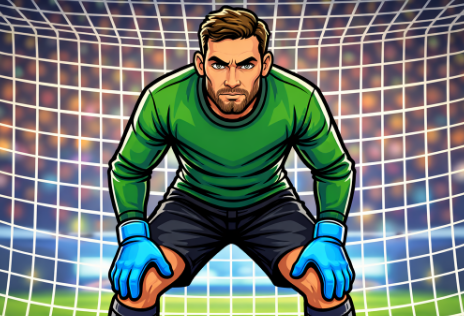
3. Train Goalkeepers for Decision Making
While much focus goes to shooters, goalkeepers also influence shootout outcomes. Research shows that goalkeeper behaviors — including deception and timing — can increase save probability. Goalkeeper training should include:
- studying opponent tendencies
- practicing delayed dives
- learning psychological tactics (eye contact, positioning).
4. Practice Under Pressure
The biggest challenge of a shootout is psychological.
Players must perform a precise skill while experiencing intense stress.
Studies of shootouts show that pressure affects:
- shot accuracy
- decision timing
- motor coordination.
Training drill
Create a “pressure ladder” drill:
- Team scrimmage ends tied.
- Players must take penalties to end practice.
- Missing results in fitness exercises for the group.
Adding stakes replicates real pressure and improves resilience.
Why Talent Still Matters in Shootouts
One of the study’s most interesting findings is that overall team quality still shows up in shootouts, even though penalties appear to be isolated events.
Why? There are several possible reasons:
Better players execute skills more consistently
Elite players generally have:
- better technique
- more match experience
- stronger emotional control.
These traits help under pressure.
Strong teams build confidence
Confidence is contagious in sport. Players from stronger teams may approach shootouts believing they will win — which affects performance.
Better teams prepare more
Top clubs often rehearse shootouts with sports psychologists and data analysts. Preparation reduces uncertainty.
The Bottom Line for Players and Coaches
Penalty shootouts will always include a degree of randomness. But the science shows they aren’t pure luck. Stronger teams win more often, and the difference may come from preparation, confidence, and skill.
For coaches, the takeaway is simple:
Train shootouts deliberately.
Include them regularly in training sessions, designate penalty takers, and simulate high-pressure environments.
The next time a knockout match goes to penalties, your team will be ready.