Do Small-Sided Games Actually Improve Game Intelligence?
Small-sided games (SSGs) have become a popular training tool in soccer, with the claim that they not only enhance technical skills but also boost “game intelligence.” But what does the research say about these benefits, and how do SSGs contribute to a better understanding of space and decision-making on the pitch?
What Are Small-Sided Games?
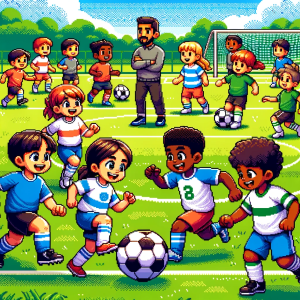
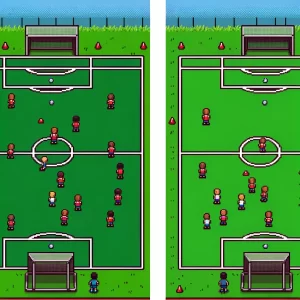
Small-sided games reduce the number of players and, sometimes, the pitch dimensions, creating a practice environment that mimics match situations on a smaller scale. Coaches often use SSGs because they allow players to:
• Engage in more touches on the ball
• Experience a higher frequency of decision-making opportunities
• Work on rapid transitions and tactical adjustments
The Link Between SSGs and Game Intelligence
Game intelligence involves understanding the game’s dynamic nature, anticipating opponents’ moves, and making strategic decisions in real time. The cognitive processes essential to high-level performance include situational assessment, pattern recognition, and effective decision-making. Research in cognitive soccer models, such as that discussed in Habekost et al. (2024), indicates that these mental processes underpin elite performance. In SSGs, the increased pressure, proximity of opponents, and limited space force players to quickly assess their surroundings and choose the most effective action—whether that means passing, dribbling, or repositioning.
Benefits Highlighted by Research
While the research is still evolving, several key benefits of SSGs have been identified:
• Enhanced Decision-Making: With tighter spaces and fewer teammates, players must make rapid decisions. This “act‐under-pressure” environment has been associated with improved executive control processes, as players must quickly process visual, spatial, and tactical information.
• Improved Spatial Awareness: The smaller playing area means every movement and pass is interrelated. As players repeatedly engage in these compact scenarios, they tend to develop a better sense of spatial relationships and timing—both critical components of what many call “game intelligence.”
• Increased Tactical Adaptability: Because SSGs simulate different match scenarios but in a condensed environment, they force players to adapt to constantly changing situations. Over time, these adaptations contribute to deeper tactical understanding, enabling them to identify and exploit spaces more efficiently during actual games.
Caveats and Considerations
It is also important to remember that game intelligence is a complex, multifaceted construct. While many studies suggest a positive relationship between SSGs and cognitive development in soccer, individual differences in physical and cognitive maturation can influence outcomes. Moreover, the structure and intensity of SSGs should be carefully managed, as excessive focus on technical drills without proper tactical context may not yield the desired improvements in game awareness.
Conclusion
The current research suggests that well-designed small-sided games can indeed enhance components of game intelligence in soccer. They do this by creating a high-pressure, fast-paced environment that hones decision-making, spatial awareness, and tactical adaptability. As coaches and trainers continue to integrate SSGs into their programs, it will be essential to tailor these exercises to accommodate individual needs and developmental stages, ensuring a balanced approach between skill acquisition and cognitive growth.
Sources
- Habekost, T., Ovesen, J., & Madsen, J.B. (2024). Cognition in elite soccer players: a general model. Frontiers in Psychology. https://doi.org/10.3389/fpsyg.2024.1477262
By focusing on both physical and cognitive elements, small-sided games hold promise as an effective means to boost game intelligence—providing players with the mental sharpness required for high-level competition.