The Science Behind the Perfect Long Ball in Soccer
Soccer is a sport that combines both art and science, particularly when it comes to mastering the perfect long ball. This technique isn’t just about striking the ball as hard as possible; it’s about understanding the underlying physics that govern the ball’s movement through the air.
The Role of Physics in Soccer
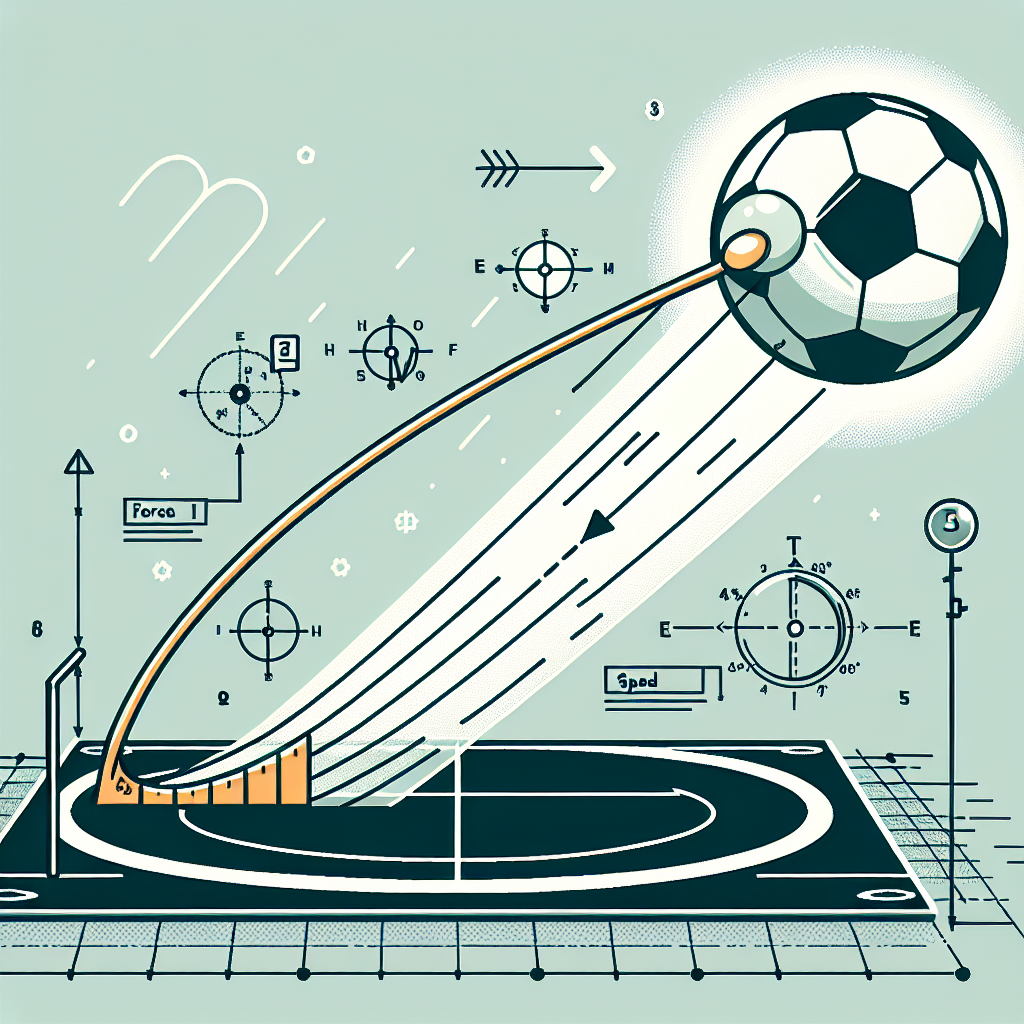
Newton’s laws of motion (yes, that Newton) play a critical role in soccer, especially in the execution of a long ball. The application of force, angle of release, and spin are all variables that can be manipulated to achieve the desired trajectory and distance.
The Importance of the Right Angle
Choosing the correct angle of strike is crucial. A study by Biolin Scientific shows that the angle, combined with the player’s technique, dictates how the ball ascends and then descends. The optimal angle is often around 45 degrees for maximum distance.
Magnus Effect and its Impact
The Magnus Effect is a fundamental concept that comes into play when a ball is spun. This spin creates a pressure difference on either side of the ball, resulting in a curved flight path. Learning to utilize this effect can significantly enhance a player’s ability to send the ball long distances accurately.
As explained by a Vizari Sports guide, understanding how spin and air resistance work together is key to curving the ball to avoid defenders and reach teammates far up the field.
The Equipment Factor: Design and Materials
Advancements in soccer ball design have also influenced the way long balls are played. The 2010 World Cup’s Jabulani ball, for example, introduced ‘aero grooves’ to stabilize its flight as discussed by Popular Science. This kind of innovation helps players to better predict the ball’s trajectory.
Material Science
The materials used in ball construction can affect a ball’s drag and stability. The level of friction between the foot and the ball during the strike, influenced by the ball’s surface material, affects the amount of spin imparted.
Practical Application on the Field
While physics provides the framework, practice and technique are essential for mastering the long ball. Training drills that focus on angle adaptation, varying spin, and consistent force application help players internalize these scientific principles naturally.
‘Soccer is not just about physical prowess; it’s about understanding and applying the science of the game to gain a competitive edge,’ says a coach from RISE FC Soccer.
Conclusion
Understanding the science behind the long ball can transform the way players perceive the game. By leveraging physics in their training, players can improve their precision and effectiveness on the field. Whether you’re aiming for a perfect pass or a decisive goal, having a grasp of these scientific principles is invaluable.
As more advanced studies and innovations in soccer equipment continue to emerge, players will have even more tools at their disposal to strategically enhance their game.