How Your Coaching Changes With Age
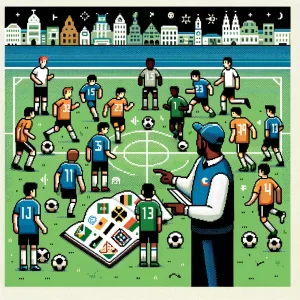
Picture this: two training fields side by side. On one, U10s swarm the ball while the coach shouts constant instructions. On the other, U16s play almost freely—until a mistake sparks a sharp scolding from the coach.
Most of us assume this is age-appropriate soccer coaching in action. Younger players need telling. Older players need accountability. Makes sense, right?
But a detailed study of elite English youth academies suggests something surprising: players’ age matters less than coaches think. What really drives coaching behavior is the coach’s beliefs, background, and pressure from the environment—not player development science.
What the Study Actually Looked At
Researchers observed 12 professional youth coaches across six age groups (U10-U16) at a Premier League academy. They didn’t just count drills. They tracked every instruction, question, piece of feedback, moment of silence, and punitive reaction—over 33,000 coaching behaviors in total. Then they interviewed coaches to understand why they coached the way they did.
This combination—what coaches do plus what they believe—is where things get interesting.
What Changed as Players Got Older
Here’s the surface-level pattern most coaches will recognize:
- Younger age groups (U10–11):
- Heavy instruction (“stand here,” “pass now”)
- Mostly drill-based, training-form activities
- Lots of praise, very little scolding
- Middle ages (U12–13):
- Slightly more questioning
- Still dominated by drills over games
- Coaches talk about “letting players learn,” but behavior doesn’t fully match
- Older age groups (U14–16):
- More feedback, especially technical detail
- More game-based, playing-form activities
- Significantly more scolding and punitive reactions age_coaching
On paper, this looks like logical progression. But the interviews told a different story.
The Real Driver: Coaching Beliefs, Not Player Needs
When asked why they coached this way, most coaches didn’t reference child development, learning theory, or long-term athlete development. Instead, they said things like:
- “This is quicker.”
- “Parents expect me to be doing something.”
- “That’s how I was coached.”
- “We’re running out of time before contracts.”
In other words, coaching behavior was shaped by pressure and habit, not evidence-based principles of learning. Even more striking: coaches rarely used silence or questioning intentionally. Silence happened only when they “had nothing to coach.” Questions were often used just to get a fast answer—not to spark thinking. age_coaching
That matters, because learning in soccer doesn’t come from being told—it comes from perceiving, deciding, and adapting.
Why This Matters for Player Development
Here’s the risk:
- Too much instruction creates players who wait for answers instead of reading the game.
- Too much scolding, especially with older players, increases fear of mistakes—and fear kills creativity.
- Too little questioning and silence removes opportunities for players to self-correct.
The study suggests many coaches believe they’re being “player-centered,” but their actions still reflect a traditional, command-style model—even at elite levels. age_coaching
5 Practical Coaching Takeaways You Can Use This Week
- Replace some instructions with questions: Instead of “Play it wide,” try: “What options did you see there?” This works even with younger players if you keep questions simple.
- Use silence on purpose: After a mistake, wait 5–10 seconds before speaking. Players often self-adjust if you give them space.
- Shift earlier to game-based practice: Small-sided games aren’t “advanced”—they’re learning accelerators. Even U10s benefit when games are well-designed.
- Watch your emotional reactions with older players: The study found scolding jumps sharply at U14+. Ask yourself: Am I correcting behavior—or venting frustration?
- Audit your habits, not your players: If you’re always telling, ask why. Is it development—or pressure from parents, time, or tradition?
Bigger Picture: Where Soccer Is Heading
Modern coaching trends—constraints-led approaches, ecological dynamics, data-informed feedback—all point in the same direction: players learn best when coaches design environments, not scripts.
This research reminds us that innovation isn’t about new drills. It’s about challenging our assumptions as coaches.
Your Turn to Kick It Off ⚽
- Where do you see yourself relying on instruction out of habit rather than need?
- How might your sessions change if silence and questioning were planned tools?
- What pressures—parents, results, time—most shape your coaching style?
If this sparked reflection, share it with a fellow coach or drop your thoughts in the comments. The best coaching conversations happen off the clipboard.