What Makes Goalkeepers Win
Picture a tight match on a Sunday morning. Your keeper hasn’t faced many shots, but every time the ball goes back to them, the whole team exhales. The build-up stays calm. The defense steps higher. The opponent hesitates.
Now flip the script. Same number of saves, but shaky distribution, rushed clearances, and poor decisions under pressure. Suddenly, your back line drops. Your midfield disconnects. You’re defending wave after wave.
According to a major 2023 review of goalkeeper research, that difference is not accidental. It’s measurable—and trainable.
This matters now more than ever. Modern soccer has turned goalkeepers into decision-makers, distributors, and pressure managers. If your training still treats them as “the last line only,” you’re leaving performance on the table.
What the research actually studied (without the jargon)
Researchers reviewed studies from top databases (WOS, Scopus, PubMed, SPORTDiscus) to identify individual performance indicators for football goalkeepers. Translation: which goalkeeper actions most consistently connect to team success.
They didn’t focus on vibes or reputation. They focused on observable actions during matches. Across professional, elite, and youth settings, four clusters of goalkeeper performance stood out:
- Goal prevention efficiency
- Ball distribution quality
- Volume of offensive and defensive actions
- Physical and cognitive demands under pressure
Let’s break those down the way coaches and players actually experience them.
The big takeaway: Saves matter—but they’re not the whole story
Yes, stopping goals still matters. One of the strongest indicators was percentage of avoided goals—basically, how often a keeper prevents scoring relative to shots faced. That includes clean saves, blocks, deflections, and positioning that forces bad shots.
But here’s the twist: Goalkeepers on successful teams often don’t lead in raw save totals.
Why? Because their value shows up earlier in the play.
Think of it like this: A keeper with 10 saves might be busy because the team is constantly under pressure. A keeper with 3 saves but 30 clean distributions might be quietly controlling the match.
Distribution is the new goalkeeper superpower
One of the clearest findings was the importance of goal kick and passing distribution. High-performing goalkeepers consistently showed:
- Higher pass accuracy
- Better decision-making under pressure
- More involvement in team build-up
This aligns perfectly with what we see in modern systems—from elite academies to possession-based youth teams.
Soccer analogy: A goalkeeper is no longer a wall. They’re the first midfielder. If your keeper can’t play through pressure, your entire team shape collapses.
Why action volume matters (even without the ball)
Another insight coaches often miss: the number of goalkeeper actions matters, not just their outcomes.
That includes:
- Defensive actions (blocks, clearances, exits)
- Offensive actions (short passes, long distributions)
- Movements without the ball (positioning, readiness)
More actions usually meant better performance, not sloppier play. Active keepers stay engaged, read the game better, and react faster. This supports a key coaching principle: inactivity is not rest—it’s rust.
5 training takeaways you can apply this week
Here’s how to turn research into reps:
- Track “avoided goals,” not just goals conceded
Review clips where positioning or decision-making prevented a shot entirely. Praise those moments. - Build distribution pressure into every session
Add time limits, pressing cues, or numerical disadvantages when keepers play out from the back. - Design drills with continuous goalkeeper involvement
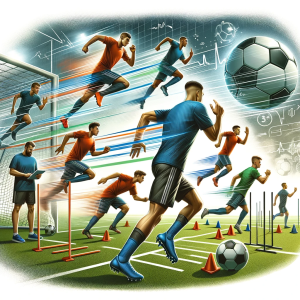
Avoid drills where the keeper stands still for long stretches. Rotate actions quickly. - Train decision-making, not just technique
Ask “why that option?” after passes or clearances. Game intelligence matters as much as footwork. - Condition movement, not mileage
Focus on short sprints, explosive resets, and reaction speed—not just total distance covered.
How this fits bigger soccer trends
This research supports where the game is already going:
- Player safety: Better positioning and anticipation reduce last-second collisions.
- Youth development: Early exposure to distribution builds confidence and tactical IQ.
- Data-informed coaching: You don’t need fancy wearables—match video and simple stats work.
- Club identity: Goalkeepers shape how teams attack, defend, and emotionally settle.
If your club wants consistency, start between the posts.
Your Turn to Kick It Off
- How much of your goalkeeper training focuses on decisions with the ball?
- What’s one drill you could tweak this week to increase keeper involvement?
- Should goalkeeper success be judged differently at youth vs. senior levels?
Drop your thoughts below—or share this with a coach who still thinks keepers “just need good hands.”