Train Keepers Like Games
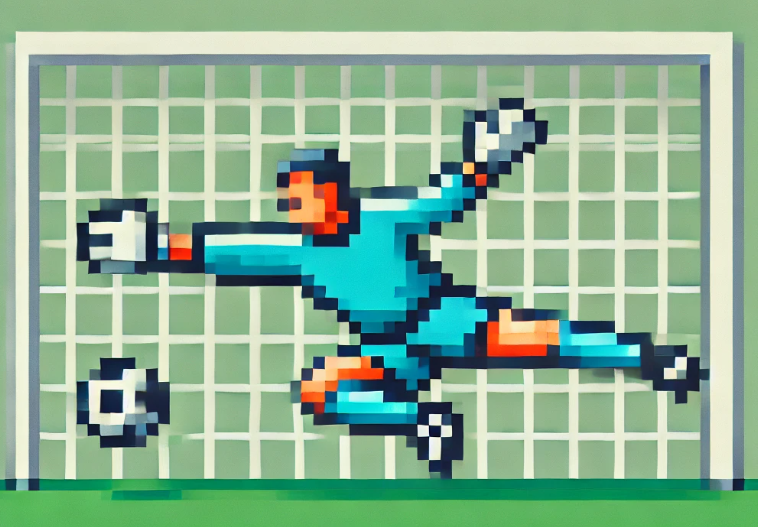
Picture this: it’s the 72nd minute. A low cross skips off a defender, the striker stabs at it, and the ball ricochets toward goal. Your keeper reacts instinctively—no textbook dive, no perfect set position—but somehow the ball stays out.
After the match, a coach mutters: “Technique was messy, but it worked.”
Science backs that up.
A major study of elite goalkeeper coaches asked a simple question: how does the modern football goalkeeper actually train? The answers challenge how many clubs still run sessions—and point to better ways to develop confident, game-ready keepers.
What the Research Found (in Plain Soccer Language)
Researchers interviewed 15 elite goalkeeper coaches from top leagues and national programs worldwide. Despite different countries and playing styles, the coaches agreed on one thing: Decision-making is the most important goalkeeper skill—more important than technique.
The coaches consistently identified four essential skill areas for modern goalkeepers:
- Decision-making – choosing what action to take and when
- Mentality – courage, focus, resilience, confidence
- Athleticism – explosiveness, speed, agility, coordination
- Technical skills – catching, diving, footwork, distribution
Here’s the twist: Even though decision-making mattered most, 50–70% of typical goalkeeper training time was still spent on isolated technical drills—predictable shots, clean reps, minimal pressure. In other words, keepers are trained like machines… but games are chaos.
Why This Gap Matters
Modern goalkeepers are no longer just shot-stoppers. They defend space, start attacks, sweep behind the back line, and act as an 11th field player. That means:
- Reading deflections
- Adjusting positioning constantly
- Making split-second choices under pressure
- Recovering mentally after mistakes
You don’t learn that from perfect reps alone. The study shows most goalkeeper sessions follow a familiar structure:
- Pre-activation & warm-up (physical prep)
- Technical block (catching, handling, repetition-heavy drills)
- Complex block (game-like scenarios with decisions)
- Cool-down & reflection
The problem isn’t technique work—it’s how long we stay there.
5 Actionable Ways to Train Smarter Goalkeepers
Here’s how to apply the research starting this week.
1. Shift the Session Balance
If decision-making is king, training time should reflect that.
Try this: Reduce isolated technical drills by 10–15 minutes and reinvest that time into unpredictable, decision-based exercises.
2. Add “Messy” Variability on Purpose
Elite coaches admitted they believe in “ideal” techniques—but games rarely allow perfect form.
Try this:
- Vary service speed and angle
- Add deflections or late movements
- Change starting positions
Success = keeping the ball out, not looking perfect.
3. Integrate Outfield Players Early
Decision-making skyrockets when real attackers are involved.
Try this: Bring in 2–3 field players for crossing, cutbacks, or 1v1s during the middle of the session, not just at the end.
4. Train Mentality Under Fatigue
Courage and focus matter most when legs are tired.
Try this: Place complex scenarios after intense movement or repeated actions. Teach keepers to decide well when tired—just like matches.
5. Debrief Like a Pro
Reflection was often overlooked, but elite coaches used it to lock in learning.
Try this: End sessions with one question:
“What decision saved you today?”
That builds confidence and game awareness.
How This Fits Bigger Soccer Trends
This research aligns with major shifts in the game:
- Player safety: Better decisions reduce reckless collisions
- Youth development: Game understanding beats early specialization
- Coaching innovation: Constraints-based, game-realistic training
- Data analytics: Measuring decisions, not just saves
Modern goalkeeper training isn’t about abandoning technique—it’s about training technique in context
Your Turn to Kick It Off
- How much of your goalkeeper training actually forces decisions?
- What drill could you modify this week to make it more game-like?
- Are you rewarding outcomes—or only perfect technique?
Drop your thoughts below and share this with your goalkeeper coach group. The next great save starts in training.